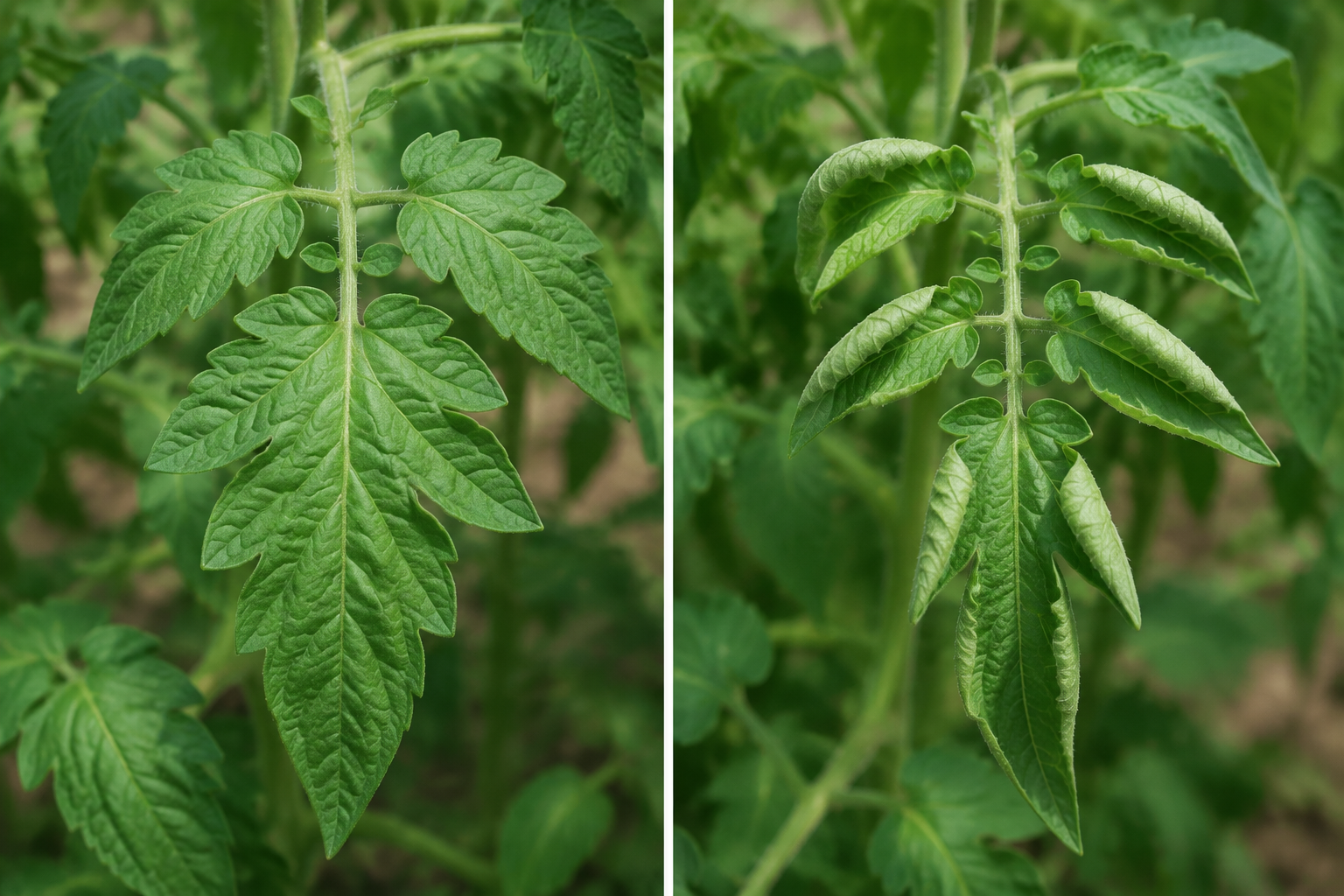
Read function before appearance
Upward rolling can be a physiological response, not a pathogen. In hot, dry or otherwise stressful conditions, a tomato can reduce effective leaf area and conserve moisture. The visible symptom is the plant changing its operating policy.
Think in flows, not snapshots
The useful equation is supply versus demand. Root-zone moisture, root damage and recent transplanting constrain supply. Heat, wind, low humidity and sudden leaf growth increase demand. A plant may curl even when the soil surface looks wet if active roots cannot deliver water at the required rate.
Sequence matters more than the symptom
Ask what changed 24–72 hours before the curl: a heat jump, pruning, rapid growth, saturated soil, cultivation near roots or a new spray. Causal timing often separates physiological roll from a spreading disease better than a single photo.
The anti-action advantage
Unnecessary treatment creates second-order damage: spray stress, lost beneficial insects, money spent and a delayed diagnosis. If new growth is normal, discoloration is absent and the pattern stabilizes after weather moderates, observation can be the highest-skill action.